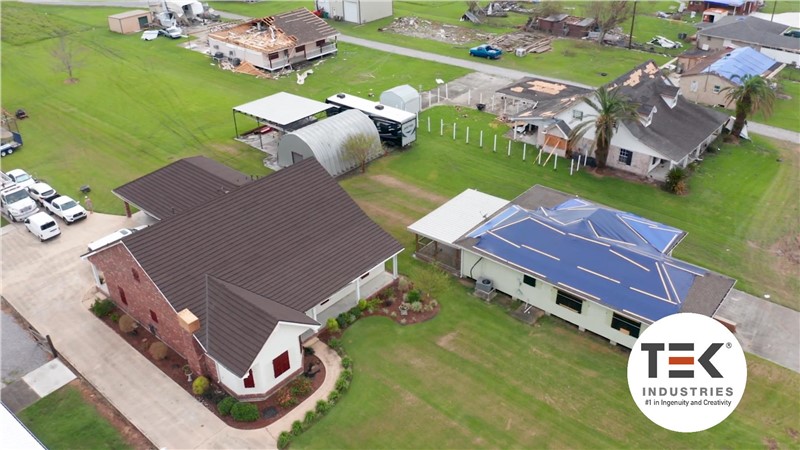
 One of the most dangerous assumptions a homeowner can make after a storm is that no visible damage means no damage at all. In reality, some of the most costly roof problems develop from storm impacts that leave no immediate trace on the surface — no missing shingles, no obvious leaks, no dramatic signs of failure. The damage is there. It's just hidden.
And for homeowners who go through the process of uncovering that damage, the conclusion is increasingly the same: repairing a compromised asphalt roof isn't the answer. Replacing it with TEK Industries® stone-coated steel is.
Why Hidden Storm Damage Is So Common
Modern roofing materials are engineered to look intact even when their structural performance has been compromised. Asphalt shingles can suffer significant granule displacement and micro-fracturing from hail impact while still appearing relatively undamaged from the street. The surface looks fine — but the material's ability to resist UV exposure and water infiltration has been meaningfully reduced.
Wind events create a similar dynamic. Repeated uplift forces can loosen fasteners, crack sealant bonds, and compromise flashing without visibly displacing a single shingle. The roof looks fine until a subsequent rain event reveals the damage in the form of leaks, water stains, or mold growth in the attic.
This is the fundamental design limitation of asphalt shingles: they degrade in ways that aren't visible until the damage has already progressed. TEK stone-coated steel doesn't work this way — and that difference matters more than most homeowners realize until they've been through one too many storm cycles.
The Most Common Types of Hidden Storm Damage
Hail Damage Below the Surface
Hail impacts leave a signature that trained professionals identify, but that untrained eyes consistently miss:
- Bruising or soft spots on shingles that feel spongy or depressed when pressed, indicating the mat beneath the surface has been fractured
- Granule loss in concentrated strike zones on the roof surface — not just in gutters
- Dented metal components including flashing, vents, gutters, and ridge caps, which confirm hail size and impact force even when shingles appear intact
A hail event significant enough to dent metal is significant enough to have damaged your shingles — even if you can't see it from the ground. TEK stone-coated steel, by contrast, carries a Class 4 impact resistance rating — the industry's highest — meaning it's engineered to take that same hail strike without fracturing, bruising, or losing surface integrity.
Wind Damage to Fasteners and Seals
High winds don't need to remove shingles to cause damage. Repeated uplift stress can break the adhesive seals between shingle layers, back out or loosen fasteners, and crack flashing at roof penetrations — none of which is typically visible without a trained inspection.
This is precisely the vulnerability that TEK's patented interlocking panel system is designed to eliminate. By hiding fasteners within the panel overlap rather than exposing them to wind uplift, TEK roofing removes the mechanical weak points that conventional shingle installations are built around. A wind event that would compromise an asphalt roof's fastener integrity has no equivalent effect on a properly installed TEK system.
Debris Impact Damage
Falling branches and wind-driven debris can crack underlayment, puncture roof decking, or damage individual panels without creating an obvious hole. A hard strike at the wrong angle can fracture materials that were already degraded — accelerating a failure that was already in progress.
TEK's stone-coated steel construction — a 28-gauge steel core with corrosion-resistant aluminum zinc coating and a rock-coated exterior — absorbs impact forces that would fracture or displace asphalt. The material doesn't crack, split, or compress under debris strike the way traditional shingles do.
How a Professional Inspection Finds What You Can't See
A qualified TEK-authorized contractor doesn't just walk the roof looking for obvious damage. A thorough storm damage inspection includes:
- Systematic section-by-section examination of the entire roof surface
- Evaluation of metal components — gutters, flashing, vents, and ridge caps — for hail strike evidence
- Attic inspection for signs of water infiltration, daylight penetration, and compromised decking
- Written documentation with photographs to support the insurance claims process
This documentation matters. Insurance companies require evidence of storm-caused damage, and a thorough inspection report from a qualified contractor is often the difference between a claim being approved for full replacement versus partial repair.
The Insurance Argument for Full Replacement
Most homeowner's insurance policies include a claim filing window — often one to two years from the date of a loss event. Many homeowners don't realize they have storm damage until long after the storm, and by the time interior damage appears, the window to file a claim may be narrowing.
When you do file, make the case for full replacement. An adjuster's job is to settle claims efficiently, which can mean recommending repair when replacement is the more defensible long-term choice. A documented inspection from a TEK-authorized contractor that clearly identifies the scope of storm damage — including hidden compromise — gives you the evidence you need to support a replacement claim.
The investment in TEK stone-coated steel is one many insurance providers actively recognize: homeowners in qualifying regions frequently see premium reductions as a result of the Class 4 impact rating and CAT-5 wind performance that TEK products carry. A roof replacement that pays for itself in insurance savings is a different conversation than a repair bill that leaves you vulnerable to the next storm.
Why Replacement Beats Repair — Every Time
The hidden damage problem is ultimately a design problem with asphalt shingles. They're a material that degrades under the conditions they're meant to protect against, in ways that aren't visible until the damage is extensive, with a lifespan that requires repeated repair and eventual replacement regardless of storm history.
TEK Industries® stone-coated steel roofing is engineered to solve all three of those problems:
- It doesn't degrade invisibly: Stone-coated steel maintains its structural performance and surface integrity across decades of weather exposure.
- It's built for the conditions that destroy asphalt: Class 4 hail resistance, CAT-5 wind performance, and coastal upgrade options for salt air environments mean TEK products are designed for the storms your region actually produces.
- It's the last roof you'll need: With a limited lifetime warranty and a construction profile designed for repairability, TEK metal roofing removes the replacement cycle entirely.
Don't Let the Next Storm Find the Same Roof
The hidden nature of storm damage is what makes it so expensive over time. The first event compromises the material. The second exploits the compromise. By the third, you're looking at interior damage that far exceeds what a replacement would have cost after storm one.
If a significant storm has passed through your area and you haven't had a professional inspection, schedule one. And when the results come back, ask the right question — not "what does it cost to repair this?" but "what does it cost to never have this conversation again?"
That's the question TEK stone-coated steel answers.
Contact a TEK-authorized dealer for a professional roof inspection and a free estimate on replacing your storm-damaged roof with the most weather-resistant roofing system available.
Comments