 A major storm has passed through your area. The skies have cleared, but the damage it left behind is just beginning to reveal itself. For homeowners, the hours and days after a storm are critical — what you do (and what you don't do) can make a significant difference in how quickly your home is restored, how smoothly your insurance claim goes, and whether you end up back in the same position after the next storm.
For many homeowners, the post-storm process is also an opportunity to make a smarter long-term decision: replacing a compromised roof with TEK Industries® stone-coated steel — a roofing system engineered to perform where traditional materials consistently fail.
Step 1: Wait Until It's Safe
Before you do anything else, confirm the storm has fully passed. High winds, lightning, and saturated ground can all create dangerous conditions that linger well after rainfall stops. Do not attempt to access your roof or walk your property until emergency alerts have been lifted and conditions are clearly stable.
Once it's safe, conduct a visual survey from the ground. Look for obvious signs of damage: missing or displaced shingles, debris on the roof, damaged gutters, or granule accumulation in your yard — a telltale sign that your asphalt shingles are breaking down.
Step 2: Document Everything Before You Touch Anything
Before making any repairs or clearing debris, photograph and video document all visible damage from every angle you can safely access. Date-stamped photos are one of the most valuable assets you'll have when filing an insurance claim.
Document the following:
- Missing, cracked, or displaced roofing materials
- Dented or damaged gutters and downspouts
- Debris impact points on the roof surface
- Any interior water intrusion — ceiling stains, wet insulation, damp walls
- Damage to siding, skylights, or exterior vents
The more thorough your documentation, the stronger your position when speaking with your insurance adjuster — and the clearer the case for a full roof replacement rather than a patchwork repair.
Step 3: Take Temporary Protective Measures
Your insurance policy likely requires homeowners to take reasonable steps to prevent additional damage after a covered event. If your roof has a breach — a hole, a missing section, or exposed underlayment — you are responsible for protecting it until permanent work is completed.
Common temporary measures include:
- Placing waterproof tarps over exposed roof sections
- Boarding up broken skylights or vents
- Clearing interior areas of standing water
Keep all receipts. These costs are typically reimbursable under your policy.
Step 4: File Your Insurance Claim
With documentation in hand, contact your homeowner's insurance company to initiate a claim. Be prepared to provide the date and type of storm event, a summary of visible damage, and your photo and video documentation.
An adjuster will be assigned to inspect your property. In high-demand periods following widespread storm events, this may take several days. Don't wait for the adjuster to complete your own documentation — claims can be delayed, and conditions on your roof can change in the meantime.
When the adjuster visits, make the case for full replacement rather than repair. A roof that has been compromised by storm impact is structurally different from the roof that existed before the storm — and patching it does nothing to improve its performance in the next weather event.
Step 5: Get a Professional Roof Inspection
A ground-level visual assessment reveals only the most obvious storm damage. Hail impact, wind-loosened fasteners, and compromised flashing are often invisible from the ground but cause significant water intrusion over time.
A professional inspection by a TEK-authorized contractor gives you an accurate picture of the full extent of damage and provides documentation that supports your insurance claim. More importantly, it gives you the information you need to make a smart replacement decision — not just a quick fix.
Step 6: Replace, Don't Repair — and Upgrade While You're At It
This is where many homeowners make a costly mistake. After a storm, the instinct is to repair the visible damage and move on. But a repaired asphalt shingle roof is still an asphalt shingle roof — one that has already proven it can't withstand the conditions your area produces.
TEK Industries® stone-coated steel roofing changes that equation entirely.
What makes TEK stone-coated steel different:
- Class 4 Impact Resistance — the highest rating available, engineered to withstand 2-inch hail without fracturing, bruising, or losing surface integrity
- CAT-5 Wind Performance — TEK's patented interlocking panel system eliminates the fastener vulnerabilities that wind exploits in conventional shingle installations
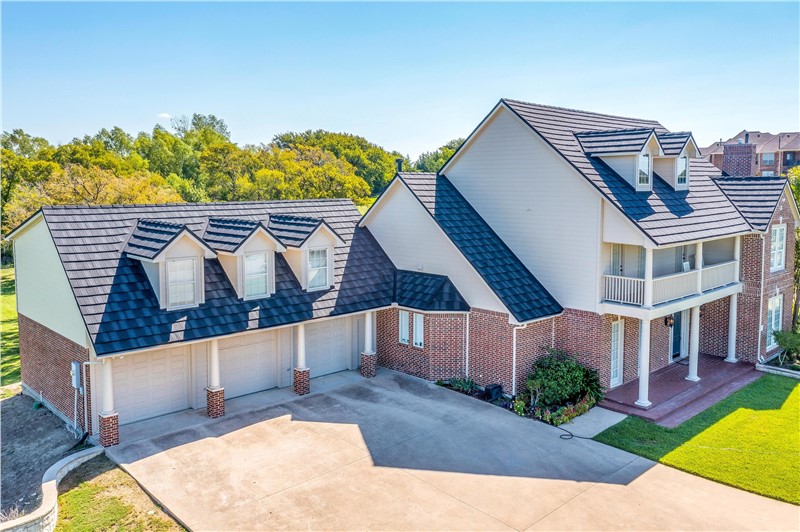
- Stone-Coated Steel Construction — a solid 28-gauge steel core with corrosion-resistant aluminum zinc coating and a rock-coated exterior means TEK roofing doesn't degrade under UV exposure, moisture, or impact the way asphalt does
- Walkable and Repairable — in the rare event that a panel is damaged, TEK's design allows for targeted repairs without compromising surrounding sections
- Limited Lifetime Warranty — TEK stands behind the performance of their products with long-term coverage that asphalt shingles simply can't match
For homeowners in hurricane zones, hail corridors, or coastal regions, replacing a storm-damaged roof with TEK stone-coated steel isn't just an upgrade — it's an exit from the repair-replace cycle that traditional roofing materials put you in.
Step 7: Choose Your Contractor Carefully
Storm events attract predatory contractors who move through affected areas offering fast, cheap repairs. These "storm chasers" often use substandard materials, perform incomplete work, and disappear before problems surface.
Protect yourself by working with licensed, insured contractors with verifiable local references — and specifically, contractors who are authorized to install TEK Industries® products. TEK-authorized dealers have access to the full product line, complete installation guides, and the manufacturer support needed to ensure your new roof is installed correctly and covered under warranty.
The Right Roof Makes the Next Storm Less of a Concern
No home can be made entirely storm-proof, but the roofing system you choose has a direct impact on how your home weathers future events. Many homeowners who replace storm-damaged roofs with TEK stone-coated steel report lower insurance premiums as a result of the improved impact and wind ratings — a return on investment that begins immediately.
The storm that just hit your home doesn't have to happen to your roof again the same way.
Ready to replace your storm-damaged roof with a system built to last? Contact a TEK-authorized dealer today for a free evaluation and estimate.
Comments